
Season 2, Episode 8: The World as Our Laboratory: Natural Experiments and the Science of Causality with Dr. Claire Boone
What if the most powerful experiments in science aren’t designed in a lab—but by life itself? From wartime sugar rationing in Britain to a bureaucratic glitch in Chile’s health system, the world is constantly running experiments on us. The question is whether we’re paying attention.
On this episode of The Emerging Scholar, we sit down with Dr. Claire Boone, Assistant Professor of Economics at McGill University, for a deep dive into the fascinating world of natural experiments. Building on our earlier conversation in Season 1 with Dr. Bapu Jena, this episode explores how real-world shocks, policy quirks, and behavioural nudges can unlock powerful insights about health, decision-making, and causal inference.
Dr. Boone shares how she uses behavioural economics and quasi-experimental methods to study everything from the lifelong effects of early childhood nutrition to preventive care uptake in Chile and the spillover effects of appointment reminders. Her work shows how seemingly ordinary disruptions—rationing policies, administrative rules, missed appointments—can reveal extraordinary truths about how health systems function and how they can be improved.
This fantastic conversation is a reminder that groundbreaking research doesn’t always begin with a randomized trial. Sometimes, it begins with a careful eye, a clever design, and the courage to treat the world itself as a laboratory.
Papers & Resources That We Touched On In This Episode:
- Dr. Claire Boone, McGill Bio
- All You Need Is Nudge (Freakonomics)
- Thinking, Fast And Slow by Daniel Kahneman
- Nudge: Improving Decisions about Health, Wealth, and Happiness by Cass R. Sunstein and Richard Thaler
- Encouraging Preventive Care to Manage Chronic Disease in Chile
- Exposure to sugar rationing in the first 1000 days of life protected against chronic disease
- How Spillovers from Appointment Reminders Improve Health Clinic Efficiency
- Multi-use physical activity trails in an urban setting and cardiovascular disease: a difference-in-differences analysis of a natural experiment in Winnipeg, Manitoba, Canada
- A Deep Dive into the research of Dr. Bapu Jena
- Random Acts Of Medicine by Dr. Bapu Jena and Dr. Christopher Worsham
- Dr. Kevin Volpp's lab at Penn University
Guests
-
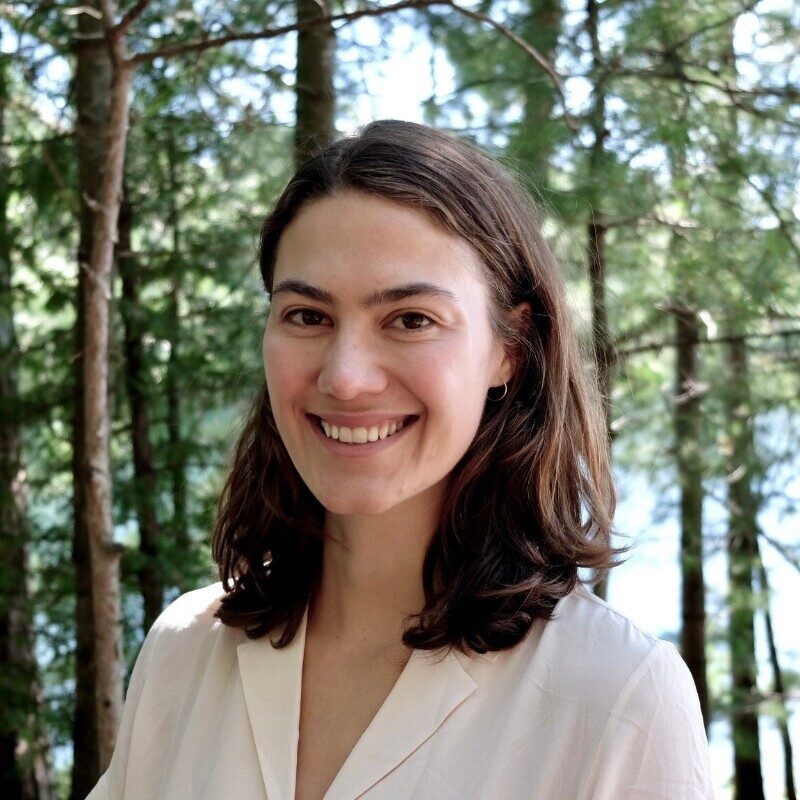
Dr. Claire Boone
Dr. Claire Boone is an Assistant Professor at McGill University, jointly appointed in the Department of Economics and the Department of Equity, Ethics, and Policy in the Faculty of Medicine. A health economist by training, her research uses behavioral economics to understand and improve health services delivery, with a particular focus on healthcare provider decision-making.
Dr. Boone employs quasi-experimental methods, machine learning, and insights from behavioral science to study how decisions are made in clinical and policy settings—and how those decisions can be improved to strengthen health systems. She earned her PhD in Health Policy (Health Economics) from University of California, Berkeley, as well as an MPH in Epidemiology and Biostatistics, and holds a BASc in Biology, Economics, and International Development from McGill University.
Prior to joining McGill, she was a Postdoctoral Fellow at the University of Chicago Booth School of Business, affiliated with the Center for Applied Artificial Intelligence and the Center for Health and the Social Sciences. She also served as a research scientist in the Health Research Accelerator at Providence, where she worked at the intersection of clinical operations, data science, and health policy.